

Post-Renovation Cleaning: What Needs to Be Done Before Moving In

Post-renovation cleaning services to remove dust, residue and renovation mess before moving in. Discover what to clean and how to prepare your property.
Renovating your home, apartment, villa or commercial property can give the space a fresh new look. But once the renovation work is complete, there is usually one more important step before you can comfortably move in: post-renovation cleaning.
Fine construction dust, paint marks, grout residue and debris can settle across floors, windows, cabinets, fixtures and other surfaces. Some of this dust can also collect in corners and areas that are easy to miss during regular cleaning.
Professional post-renovation cleaning services are designed to tackle this renovation-related mess and help prepare the property for everyday use.
But what exactly needs to be cleaned after renovation? Let's take a closer look.
What Is Post-Renovation Cleaning?
Post-renovation cleaning is a detailed cleaning service carried out after renovation, remodeling or construction work has been completed.
Unlike routine cleaning, it focuses on removing the dust, residue and mess left behind by renovation activities.
Post-renovation cleaning service includes below points depending on the property and agreed scope:
- Removing fine construction dust
- Cleaning floors and tiles
- Cleaning windows and glass
- Wiping doors, frames and skirting
- Cleaning kitchen cabinets and surfaces
- Cleaning bathrooms and fixtures
- Dusting switches, fittings and light fixtures
- Cleaning built-in wardrobes and storage
- Cleaning accessible corners and hard-to-reach areas
- Addressing suitable surface marks or residue
Exact requirements depend on the size of the property, the type of renovation and the condition of the space.
Why Does a Renovated Property Need a Detailed Clean?
Renovation creates a different type of mess from normal household use.
Cutting, drilling, sanding, painting and installation work can release fine particles that settle on surfaces throughout the property. Even when the visible construction debris has been removed, a layer of fine dust may remain.
Regular cleaning is mainly intended to maintain a property that is already in use. Post-renovation cleaning, on the other hand, is focused on dealing with the specific conditions created by renovation work.
For example, a normal cleaning visit may include vacuuming, dusting and mopping. After renovation, additional attention may be needed for window tracks, cabinet interiors, tiles, fixtures, doors and other areas affected by construction dust.
What Needs to Be Cleaned Before Moving In?
A proper post-renovation clean should cover more than just the main floors and visible surfaces.
1. Construction Dust and Fine Particles
Fine dust can settle on countertops, shelves, cabinets, doors, fixtures and other surfaces.
These areas should be carefully dusted and wiped to remove settled particles. Corners, edges and less visible areas should also be checked.
2. Floors and Tiles
Renovation can leave dust, grout residue, paint splashes and other marks on flooring.
Cleaning may involve the below points depending on the material and condition:
- Vacuuming or sweeping
- Mopping
- Cleaning edges and corners
- Removing suitable surface residue
- Checking areas around newly installed fixtures
To avoid damaging the finish, the cleaning method should be suitable for the flooring material.
below 3. Windows and Glass
Windows often collect dust and marks during renovation work.
Glass panels, window frames and accessible tracks should be checked and cleaned. Clean windows can also make the newly renovated space feel brighter and more finished.
4. Walls, Doors and Skirting
Walls, doors, frames and skirting boards can collect fine dust during renovation.
These surfaces should be carefully inspected and cleaned according to their material and finish. Any paint or adhesive marks should also be assessed before attempting removal.
5. Kitchen Cabinets and Surfaces
New or renovated kitchens can collect dust both inside and outside cabinets.
Depending on the agreed scope, cleaning may cover:
- Cabinet surfaces
- Countertops
- Sinks
- Handles
- Accessible cabinet interiors
- Surrounding areas
- Appliances where included
Cleaning these areas before storing food, utensils or other household items helps make the kitchen ready for use.
6. Bathrooms and Fixtures
Bathrooms should receive detailed attention before they are used.
Cleaning may include toilets, sinks, showers, taps, mirrors, tiles, floors and accessible cabinets.
Renovation residue should be assessed carefully because some materials require specific cleaning methods.
7. Light Fixtures, Switches and Fittings
Small fixtures can easily be overlooked after renovation.
Light fixtures, switches, handles and other accessible fittings can collect fine dust and should be included in the final cleaning checklist.
8. Built-In Wardrobes and Storage Areas
Wardrobes, cupboards and storage units can collect dust during installation or renovation.
Cleaning these areas before placing clothes, household items or other belongings inside can make the move-in process more comfortable.
9. Corners and Hard-to-Reach Areas
Fine dust often settles along edges, behind fixtures and in corners.
These areas may not receive enough attention during a basic cleaning routine, so they should be included in a detailed post-renovation cleaning process where accessible.
Post-Renovation Cleaning vs Deep Cleaning: What's the Difference?
Post-renovation cleaning and deep cleaning can overlap, but they are not necessarily the same service.
Deep cleaning focuses on providing a more detailed clean than routine maintenance. It can include areas that are often missed during everyday cleaning.
Post-renovation cleaning is specifically designed around the dust, residue and cleaning requirements created by renovation or construction work.
For example, post-renovation cleaning may involve dealing with construction dust, grout residue, paint marks and dust around newly installed fixtures.
If you're searching for a deep cleaning company after completing renovation work, check whether the company also offers a dedicated post-renovation service. The right service should match the property's condition and the type of work that was completed.
Read Also: What Is Included in a Deep Cleaning Service?
When Should You Schedule Post-Renovation Cleaning?
The final cleaning should generally be scheduled after the main renovation work has been completed.
A practical sequence is:
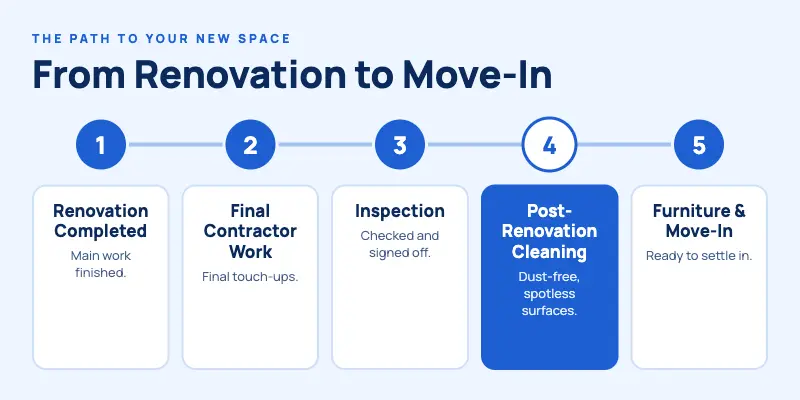
Scheduling the cleaning while contractors are still working may result in additional dust and debris being created afterwards.
If painting, drilling, flooring, carpentry or installation work is still underway, it is usually better to wait until those activities are finished before arranging the final clean.
Should You Clean Before or After Moving Furniture In?
Whenever possible, schedule the main post-renovation cleaning before furniture and personal belongings arrive.
An empty or mostly empty property gives the cleaning team better access to:
- Floors
- Corners
- Windows
- Cabinets
- Doors
- Built-in storage
- Other accessible surfaces
Once furniture is in place, some areas become harder to reach.
For this reason, arranging post-renovation cleaning services before moving in can make the final preparation more efficient.
How to Prepare Your Property for Cleaning
You can make the cleaning process smoother with a few simple steps:
- Confirm that major renovation work is complete.
- Make sure contractors have finished drilling, painting and installation.
- Remove large construction debris if it is outside the agreed cleaning scope.
- Keep rooms, cabinets and storage areas accessible.
- Inform the cleaning team about delicate materials or surfaces.
- Point out areas that need particular attention.
- Confirm the service scope before the cleaning begins.
Clear communication is especially important after renovation because every property can have different requirements.
How to Choose Post-Renovation Cleaning Services
Not every cleaning service follows the same process. Before booking, consider these factors.
Check the service scope
Ask what areas and tasks are included. A clear scope helps avoid misunderstandings.
Consider your property type
Apartments, villas, offices and commercial properties can have very different cleaning requirements.
Ask about renovation residue
If your property has paint, grout or adhesive residue, ask whether the cleaning team can address it and whether additional treatment is required.
Check genuine reviews
Customer reviews can provide useful information about service quality, communication and experience with similar properties.
Confirm the quotation
Understand what is included in the quoted service and whether additional work may involve extra charges.
A professional deep cleaning company or post-renovation cleaning provider should be able to explain the service clearly and set realistic expectations.
Post-Renovation Cleaning Checklist
Before moving into your renovated property, review the following:
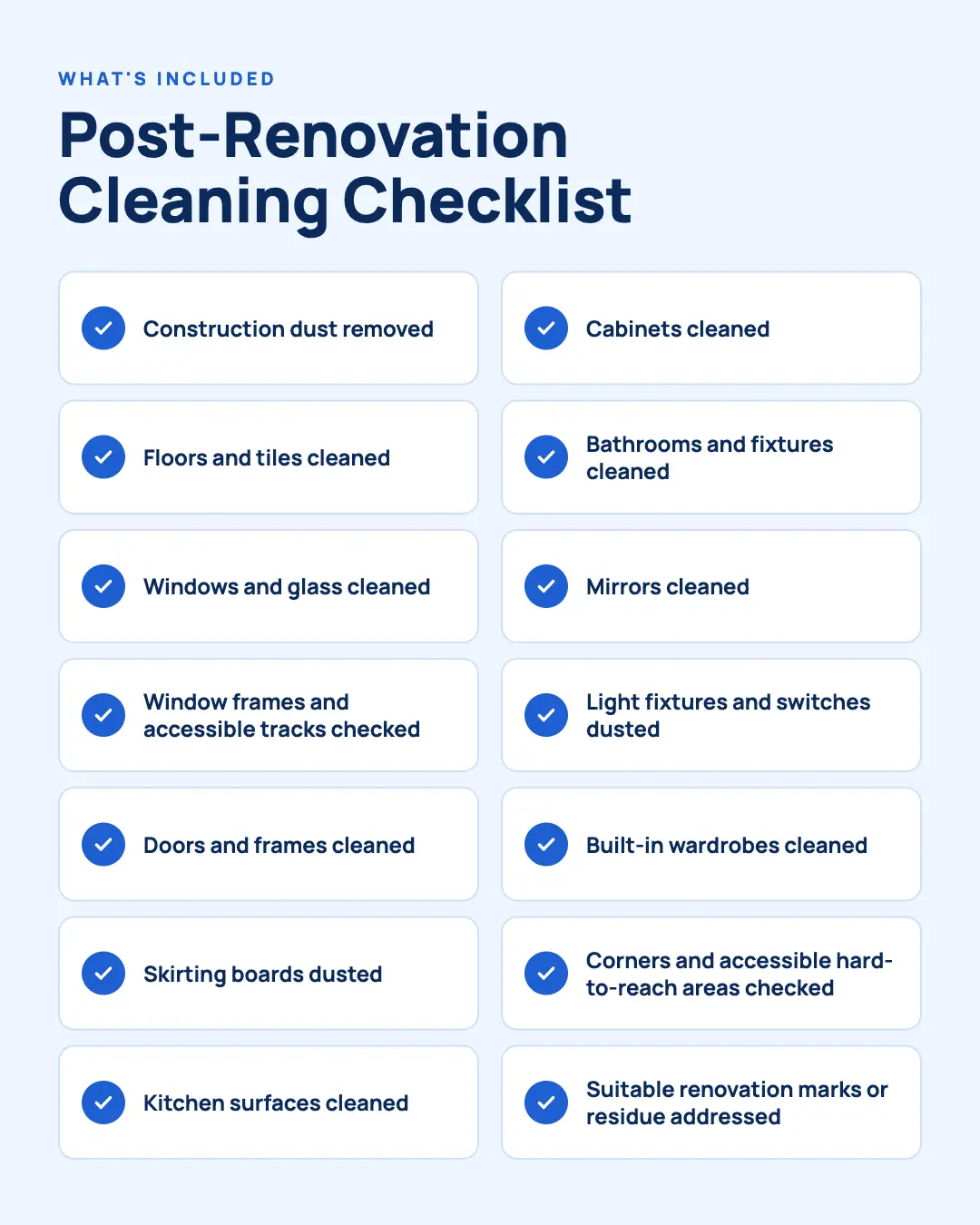
This simple checklist can help homeowners, tenants and property managers make sure the main areas have been reviewed before occupancy.
Get Your Renovated Property Ready for Move-In
Completing a renovation is an exciting milestone, but the property may still need a detailed clean before it is ready for everyday use.
From construction dust and floors to windows, kitchens, bathrooms and fixtures, a thorough post-renovation clean can help prepare the space for the next stage.
If you're looking for professional post renovation cleaning services, Sereen Care provides cleaning services for residential and commercial properties across its service areas.
Contact Sereen Care to discuss your property's cleaning requirements and get your space ready for move-in.
Frequently Asked Questions
How long does post-renovation cleaning take?
The time depends on the property's size, condition and extent of renovation work. A small apartment may require less time than a large villa or commercial property with extensive renovation dust.
Does post-renovation cleaning remove construction dust?
Professional post-renovation cleaning is designed to address renovation-related dust and residue within the agreed service scope. Large construction debris or specialist removal may require separate services.
Is post-renovation cleaning the same as deep cleaning?
No. There can be some overlap, but post-renovation cleaning focuses specifically on the cleaning needs created by renovation or construction work.
Should I book cleaning before furniture arrives?
In most cases, cleaning before furniture and belongings arrive provides easier access to floors, corners, windows, cabinets and other surfaces.
Can apartments and villas have post-renovation cleaning?
Yes. Post-renovation cleaning can be arranged for different residential and commercial property types, depending on the provider's service coverage and agreed scope.
.webp)